

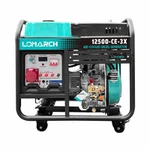


Gasoline Generator
Your Professional Gasoline Generator Supplier
Since our founding in 2016, we have consistently focused on the power equipment sector. As a professional manufacturer integrating R&D, production, and sales, our core products encompass diesel generators, gasoline generators, diesel/gasoline water pumps, micro tillers, and various auxiliary power units.


Why Choose us
24/7 Service Support
Provides round-the-clock technical consultation + global parts express delivery, with after-sales response <12 hours, eliminating user concerns.
Quality Control
Strictly adheres to the ISO9001 quality management system to guarantee consistent and reliable product quality.
Well-Experienced
A team of engineers with over 10 years of experience dedicates annual resources to new product development, ensuring technological advancements that enhance product competitiveness.
Parameter
|
Open Frame Gasoline Generator |
|||||||||
|
Model |
3500E |
6500E |
7500E |
10000E |
13500E |
6500E-3D |
7500E-3D |
10000E-3D |
13500E-3D |
|
Frequency(Hz) |
50/60 |
50/60 |
50/60 |
50/60 |
50/60 |
50/60 |
50/60 |
50/60 |
50/60 |
|
Voltage(V) |
110/230 |
110/230 |
110/230 |
110/230 |
110/230 |
400 |
400 |
400 |
400 |
|
Rated Power(kW) |
2.8 |
5 |
6.5 |
8 |
9.5 |
5 |
6.5 |
8 |
9.5 |
|
Maximum Power(kW) |
3 |
5.5 |
7 |
8.5 |
10.5 |
5.5 |
7 |
8.5 |
10.5 |
|
Power Factor |
1 |
1 |
1 |
1 |
1 |
0.8 |
0.8 |
0.8 |
0.8 |
|
Number Of Phases |
Single-Phase |
Single-Phase |
Single-Phase |
Single-Phase |
Single-Phase |
Three-phase |
Three-phase |
Three-phase |
Three-phase |
|
Fuel Consumption Rate(g/kwh) |
<395 |
<370 |
<370 |
<370 |
<370 |
<370 |
<370 |
<370 |
<370 |
|
Fuel tank Capacity(L) |
18 |
30 |
30 |
30 |
30 |
30 |
30 |
30 |
30 |
|
Operating Time(h) |
9.5 |
9 |
8 |
8 |
8 |
9 |
8 |
8 |
8 |
|
Noise At 7m(dB) |
85 |
85 |
85 |
85 |
85 |
85 |
85 |
85 |
85 |
|
Starting Method |
Manual/Electric |
Manual/Electric |
Manual/Electric |
Manual/Electric |
Manual/Electric |
Manual/Electric |
Manual/Electric |
Manual/Electric |
Manual/Electric |
|
Fuel Type |
Gasoline |
Gasoline |
Gasoline |
Gasoline |
Gasoline |
Gasoline |
Gasoline |
Gasoline |
Gasoline |
|
Power Model |
170F |
188F |
190F |
192F |
196F |
188F |
190F |
192F |
196F |
|
Power Type |
Single-cylinder, four-stroke, air-cooled OHV, 25° |
||||||||
|
Our Entire Product Series Supports Customized Solutions. Parameters Can Be Optimized To Meet Your Specific Requirements. |
|||||||||
Benefits of Gasoline Generator
Convenience: Gasoline is one of the most widely available fuels in the world. You can easily find gas stations in almost any location, which makes refueling quick and convenient, especially in emergencies.
No Special Storage Requirements: Gasoline doesn’t require any special storage infrastructure, as long as it’s kept in proper containers. Propane, on the other hand, often requires large, pressurized tanks for storage.
Cheaper Initial Purchase: Gasoline generators are often less expensive to purchase upfront compared to propane or dual-fuel models. This can make them a more affordable option for individuals or businesses on a budget.
Energy Density: Gasoline has a higher energy density than propane (more BTUs per gallon), meaning that gasoline generators can provide more power for a shorter period on a single tank of fuel. This can be useful when you need a large amount of power over a short duration.
Quick Start and Reliable for Short-Term Power: Gasoline generators are excellent for emergency backup or recreational use (e.g., camping, tailgating) because they are easy to transport and set up quickly.
Portability: Gasoline generators, especially smaller models, are often more portable than propane generators, which can require larger, heavier tanks for fuel storage.
Simpler Design: Gasoline generators are usually simpler in design, which can make them easier to maintain and repair. While gasoline engines may require more frequent maintenance than propane engines, the technology is well-established, and parts are easy to find.
No Need for Propane Tank Maintenance: Unlike propane generators, which may require regular inspection of propane tanks and connections, gasoline generators only require basic engine maintenance like oil changes and air filter replacements.
More Lightweight: Gasoline is much lighter than propane in terms of storage and transport. Propane tanks can be bulky, whereas gas cans for small generators are relatively easy to carry.
Compact for Emergencies: For small-scale power needs or backup in case of emergencies, a gasoline generator can be an ideal choice. It’s easy to store in a garage or shed and can be used for short-term power needs during a blackout, camping trip, or other events.
Higher Power Output for Large Loads: Gasoline engines generally perform better under heavy load demands for short bursts (e.g., running power tools, large appliances, etc.) due to their higher energy density per gallon.
Application of Gasoline Generator

Construction & Job Site Power
Delivers stable power for electric tools, lighting, and small equipment on construction and renovation sites where grid power is limited or unavailable.

Emergency Backup Power
Provides temporary power during outages to keep essential equipment operating, including lighting, communication devices, and basic appliances.

Outdoor Events & Temporary Installations
Supplies reliable electricity for outdoor activities such as markets, events, and other temporary setups that require portable power.
The Anatomy of Gasoline Generator
Engine
The core of each generator resides in an internal combustion engine, commonly fueled by gasoline. The engine converts chemical energy stored in fuel into mechanical energy. This procedure entails a regulated ignition of the fuel-air mixture within the cylinders of the engine.
When gasoline is sprayed into the combustion chamber and mixed with air, a spark plug ignites the mixture, initiating a rapid combustion reaction. This controlled explosion pushes the pistons, creating mechanical motion that drives the generator’s crankshaft.
Alternator
The mechanical energy produced by the engine is subsequently conveyed to the alternator, commonly referred to as the generator head. The alternator plays a crucial role in converting mechanical energy into electrical energy. It comprises a rotor and a stator, both integral to the electromagnetic induction process.
It includes accessories such as a fuel tank, fuel pump, and carburetor. This alternating current (AC) is the initial output of the generator.
Fuel System
The fuel system guarantees a consistent and regulated delivery of gasoline to the engine. It typically includes a fuel tank, fuel pump, and carburetor. The carburetor mixes the gasoline with air in the right proportion before it is injected into the engine for combustion.
The generator’s efficiency and performance depend on the optimal air-fuel mixture. Modern generators may utilize electronic fuel injection (EFI) systems for more precise control over the combustion process, enhancing fuel efficiency and reducing emissions.
Control Panel
The control panel serves as the user interface for the generator, offering controls for the initiation, cessation, and monitoring of diverse parameters. It also houses essential safety features, such as circuit breakers and voltage regulators, ensuring a stable and safe power supply.
Delivery Information
Shipping Methods
We offer a variety of shipping options, including sea freight, air freight, railway transportation, and international express delivery, to meet the diverse needs of our customers.
Estimated Delivery Time
We will provide you with the estimated delivery time for your order, which will be clearly stated in the formal order to ensure your rights are protected, allowing you to arrange for the receipt of your goods in a timely manner.
Order Tracking
We provide order tracking services, allowing you to stay informed about the current status and expected arrival time of your order. Detailed inspection information and shipping manifests, including photos and videos, are provided to ensure the security of your transactions.
Certificate


FAQ